Montrose, VA · Henrico County
Basement Water Removal in Montrose, VABasement Dehumidification & Basement Moisture Inspection
Basement Water Removal in Montrose runs from basement water pump out and basement drying services to basement dehumidification.
Answered 24/7
Local Basement Water Removal Services for Montrose
Basement Water Removal in Montrose starts with safety. Water near the furnace, water heater or electrical panel can be dangerous, so power is made safe before anyone steps into it.
Homeowners in Montrose can call (804) 531-4089 day or night when the basement is taking on water. Service also covers Highland Springs, Sandston and East Highland Park, with the same pumping and drying steps.
The Basement Water Removal Process in Montrose
Basement Dehumidification
After drying, a household dehumidifier may still be needed to keep basement humidity in a healthy range.
Basement Moisture Inspection
An inspection shows how high water wicked up the walls and how far it spread under flooring, which sets the drying plan.
Emergency Basement Flooding
A flooded basement threatens the furnace, water heater and anything stored on the floor. Fast pumping protects what can still be saved.
Sump Pump Failure Water Cleanup
Cleanup after a sump failure includes drying the area around the pit and noting whether the pump, switch or power was the cause.
Basement Floor Water Damage
Flooring that buckled or swelled is removed. Tile and sealed concrete can often be cleaned and dried in place.
Warning Signs You Need Basement Water Removal
Soggy or Wet Carpeting
Carpet that feels damp or smells sour is holding water in the pad against the concrete.
High Humidity and Condensation
Water on pipes and windows, or a constantly clammy feel, means basement humidity is too high.
Mold or Mildew
Dark spots on drywall, framing or stored items mean the area has stayed wet for days.
Wet or Damp Basement Walls
Basement walls that look dark, feel damp or show tide lines are taking on or holding water.
How Basement Water Removal Works in Montrose
Step 1: Emergency Water Extraction
Power is made safe, then pumps and extractors remove standing water from the basement floor.
Step 2: Detailed Moisture Inspection
Meters map wet walls, framing and slab areas, including behind finished walls and under flooring.
Step 3: Drying and Dehumidification
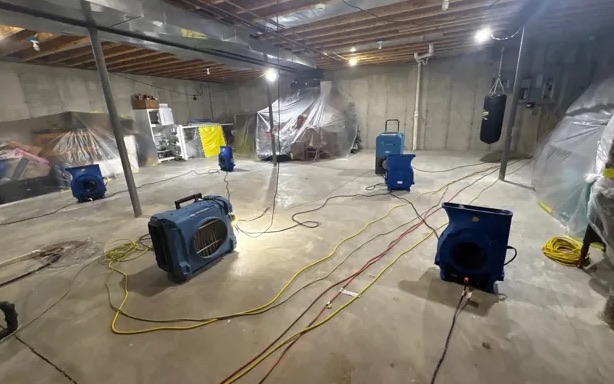
Air movers and large dehumidifiers run continuously, with readings checked every day.
Step 4: Final Verification and Monitoring
Readings are compared to dry areas, and equipment is removed only when the basement tests dry.
What Causes Water Damage in Basements
Window Well Leaks and Drainage
Window wells without drains or covers fill with rain and leak through the windows.
Improper Landscape Grading
Soil that slopes toward the house directs rainwater straight to the basement walls.
Clogged or Damaged Gutters
Clogged gutters and short downspouts dump roof water right next to the foundation.
Sewer Line Backups and Blockages
A blocked sewer line can push wastewater up through basement floor drains and toilets.
Residential and Commercial Basement Water Removal in Montrose
Residential Basement Water Removal
Finished basements used as bedrooms or family rooms need careful moisture checks behind walls and under flooring, since that is where water hides.
Commercial Basement Water Removal
Businesses with below-grade storage need wet inventory moved out and documented. Drying is planned around daily operations wherever possible.
Basement Water Removal vs. DIY: When to Call the Pros
You can move belongings up off the floor and run the dehumidifier you already own. Drying soaked walls and slab needs larger equipment and readings to confirm the job is done.
What Influences the Price of Basement Water Removal
Sewage cleanup, finished walls, after-hours calls and damaged appliances all add to the total for basement water removal in Montrose.
Basement Square Footage
Larger basements need more extraction, more drying equipment and more days of drying.
Water Depth and Volume
Deeper water takes more pumping time and usually means more materials got wet.
Drying Time Required
Basements dry slowly, and each extra day of equipment adds to the total.
Does Insurance Cover Basement Water Removal?
Coverage for basement water removal depends on the water source and your policy. The pros document the damage and drying, and your insurer decides what is covered.
Advantages of Local Basement Water Removal Experts
Contamination Safety Protocols
Sewage and dirty water are handled with protective gear, containment and disinfection.
Moisture Inspection
Meters and thermal cameras find water in walls, floors and slab that looks dry.
24/7 Emergency Response
Help is available day or night when water is rising in the basement.
24/7 Emergency Basement Water Removal in Montrose
Standing water in a basement soaks walls and floors by the hour. Call (804) 531-4089 for basement water removal in Montrose at any time, day or night.
Call Now (804) 531-4089Communities Served for Basement Water Removal
Basement water removal also covers homes and buildings in Highland Springs, Sandston and East Highland Park, close to Montrose, day or night.
- Basement Water Removal in Highland Springs
- Basement Water Removal in Sandston
- Basement Water Removal in East Highland Park
- Basement Water Removal in Bensley
- Basement Water Removal in Mechanicsville
- Basement Water Removal in Henrico
- Basement Water Removal in Dumbarton
- Basement Water Removal in Short Pump
- Emergency Damage Restoration in 23223
- Storm Damage Restoration in 23223
- Water Damage Restoration in 23223
- Water Extraction Service in 23223
- Water Leak Detection in 23223
- Water Removal Service in 23223
Common Basement Water Removal Questions Answered
What is involved in basement leak cleanup?
Stopping the leak, extracting the water, drying the floor and walls and checking for hidden moisture under flooring.
Can wet drywall in a basement be saved?
Sometimes, if the water was clean and removed quickly. Soaked or contaminated drywall is cut out above the water line.
Can I dry my basement myself with fans?
Fans help with surface water, but walls and concrete need dehumidifiers and readings to dry fully.
Why is fast water removal so important for basements?
Basements dry slowly, so every hour of standing water adds drying days and more materials to replace.
What equipment is used for basement water extraction?
Submersible pumps, extractors, wet vacs, air movers, large dehumidifiers and moisture meters to confirm drying.