Louisa, VA · Louisa County
Basement Water Removal in Louisa, VABasement Water Pump Out & Basement Moisture Inspection
Basement Water Removal in Louisa covers basement water pump out, basement wall drying and basement dehumidification after a flood.
Answered 24/7
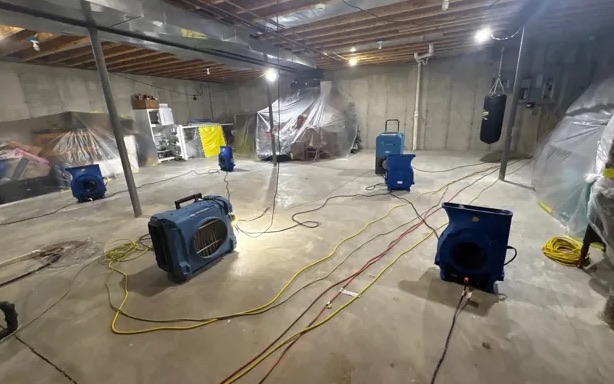
Local Basement Water Removal Services for Louisa
In Louisa, a finished basement or lower level takes more work after a flood. Carpet, pad, laminate, drywall and insulation all trap water against the concrete and framing.
A single storm or burst pipe in Louisa can flood a basement. Local water damage pros serve Louisa and nearby Mineral, Gordonsville and Orange, with help available around the clock.
Specialized Basement Water Removal for Louisa
Basement Water Pump Out
A pump-out removes standing water from the basement with submersible pumps, discharging it outside and away from the foundation.
Basement Moisture Inspection
Moisture meters and thermal cameras check walls, floors and the slab for water that is not visible, including behind finished walls.
Sump Pump Failure Water Cleanup
When a sump pump stops, groundwater spreads across the floor. The water is pumped out and the floor and lower walls are extracted.
Basement Wall Drying
Concrete and block walls dry with directed airflow and dehumidification, which pull water out of the masonry.
Basement Floor Water Damage
Flooring that buckled or swelled is removed. Tile and sealed concrete can often be cleaned and dried in place.
Warning Signs You Need Basement Water Removal
Efflorescence on Concrete Walls
White, powdery deposits on concrete walls mean water is passing through the masonry.
Gurgling Sounds From Drains
Gurgling floor drains or slow drains can be an early sign of a sewer line problem.
Rusted Appliances or Furniture
Rust on appliance bases, furniture legs or metal shelving points to standing water or long-term dampness.
Water Stains on Walls or Ceiling
Stains on lower walls or the ceiling below a bathroom or kitchen point to a leak.
How Basement Water Removal Works in Louisa
Step 1: Emergency Water Extraction
Power is made safe, then pumps and extractors remove standing water from the basement floor.
Step 2: Detailed Moisture Inspection
Meters map wet walls, framing and slab areas, including behind finished walls and under flooring.
Step 3: Drying and Dehumidification
Air movers and large dehumidifiers run continuously, with readings checked every day.
Step 4: Final Verification and Monitoring
Readings are compared to dry areas, and equipment is removed only when the basement tests dry.
Sources of Basement Water Problems
Sewer Line Backups and Blockages
A blocked sewer line can push wastewater up through basement floor drains and toilets.
Plumbing Leaks or Pipe Bursts
Supply lines, drain pipes and water heaters in the basement can leak or burst onto the floor.
High Water Table and Hydrostatic Pressure
A high water table presses groundwater against the slab and walls, forcing it inside.
Foundation Cracks and Seepage
Cracks in foundation walls and the slab let groundwater seep in during wet weather.
Both Residential & Commercial Basement Water Removal
Residential Basement Water Removal
Older homes with a basement may see seepage with every heavy storm. Water removal handles the current damage, and the entry point is noted for a waterproofing contractor.
Commercial Basement Water Removal
Multi-unit buildings with shared basements need each storage and laundry area pumped, dried and documented for the property manager.
Professional Basement Water Removal Versus Do-It-Yourself
Do not step into basement water if cords, outlets or appliances are in it. Shut off power at the panel only if you can reach it from a dry spot, then call (804) 531-4089.
Investing in Professional Basement Water Removal
Sewage cleanup, finished walls, after-hours calls and damaged appliances all add to the total for basement water removal in Louisa.
Contamination Level
Sewage or dirty water needs protective gear, removal and disinfection, which costs more.
Drying Time Required
Basements dry slowly, and each extra day of equipment adds to the total.
Access and Complexity
Narrow stairs, low ceilings and crowded storage areas make the work slower and longer.
Does Insurance Cover Basement Water Removal?
Ask your adjuster early how your policy treats seepage and sewer backups, since many policies limit or exclude both kinds of water.
Why Louisa Homeowners Trust Local Pros for Basement Water Removal
Detailed Damage Documentation
Photos, readings and drying logs are kept to support your insurance claim.
Contamination Safety Protocols
Sewage and dirty water are handled with protective gear, containment and disinfection.
Clear Communication
You get plain updates on what was found, what was removed and how drying is going.
Emergency Basement Flood Response in Louisa
If water is near outlets, the furnace or the electrical panel, stay out of it. Call (804) 531-4089 for help in Louisa and wait for power to be made safe.
Call Now (804) 531-4089Basement Water Removal Near Louisa: Areas Served
Need basement water removal outside Louisa? Service also covers Mineral, Gordonsville and Orange, including emergency help during storms.
- Basement Water Removal in Mineral
- Basement Water Removal in Gordonsville
- Basement Water Removal in Orange
- Basement Water Removal in Palmyra
- Basement Water Removal in Lake Monticello
- Basement Water Removal in Goochland
- Basement Water Removal in Charlottesville
- Basement Water Removal in Spotsylvania
- Emergency Damage Restoration in 23093
- Storm Damage Restoration in 23093
- Water Damage Restoration in 23093
- Water Extraction Service in 23093
- Water Leak Detection in 23093
- Water Removal Service in 23093
Common Basement Water Removal Questions Answered
What happens during basement moisture control?
Dehumidifiers and air movers keep humidity low while materials dry, and readings confirm when the space is normal.
What causes basement floor water damage?
Storm seepage, burst pipes, appliance leaks, foundation cracks and sewer backups through floor drains are the usual sources.
Is a sump pump failure an emergency?
Yes, especially during rain. Groundwater can rise quickly once the pump stops, flooding the floor and finished rooms.
How is basement wall drying done?
Wet drywall is cut back, insulation removed and directed airflow and dehumidifiers dry the studs and masonry.
How is contaminated water handled in a basement?
With protective gear, containment, removal of porous materials and disinfection of hard surfaces before drying.